Cold snaps come on fast, and frozen pipes are one of winter’s messiest surprises. If your home or business sits empty when temperatures drop, a freeze can quickly turn into a burst pipe and serious damage. This guide gives clear, practical steps to stop pipes from freezing, shows how to spot trouble early, and explains what to do in an emergency. Use it to protect your property and avoid costly headaches this winter — we cover prevention, warning signs, immediate actions, emergency repair options, typical costs, and winterization tips.
How Can You Prevent Pipes from Freezing When You’re Away?
A little preparation goes a long way. Before you leave, apply a few targeted measures to cut the risk of frozen pipes — especially in unheated or exposed areas. Simple, effective precautions include:
- Insulate Pipes: Wrap exposed runs with foam insulation or pipe-wrap, focusing on basements, attics, crawlspaces, and garages. Good insulation helps keep pipe temperatures steady during cold spells.
- Set Thermostat: Keep the thermostat at or above 55°F (13°C) while you’re away so indoor temps won’t fall low enough to freeze plumbing.
- Drain Outdoor Lines: Shut off and drain outdoor faucets, irrigation lines, and hose bibs before you leave so standing water can’t freeze and damage pipes.
What Are Effective Pipe Insulation Methods to Protect Your Plumbing?
Common, reliable choices are foam pipe sleeves, fiberglass wrap, and electric heat tape. Foam sleeves are quick and easy for most exposed runs; fiberglass is good where space is tight; and heat tape helps on runs that stay prone to freezing. Match the method to the pipe location and how severe the exposure is.
How Should You Set Your Thermostat and Manage Water Supply Before Leaving?
Set the thermostat to at least 55°F (13°C) and leave interior doors open so warm air can circulate. For extra protection, shut off the main water supply and open faucets to drain lines — that reduces pressure and removes water that could freeze while you’re gone.
What Are the Signs That Your Pipes Have Frozen?
Finding frozen pipes early can keep a small issue from becoming a major repair. Watch for these common signs:
- Low Water Pressure: A sudden drop in pressure or barely any water from a faucet often means a blockage — possibly ice.
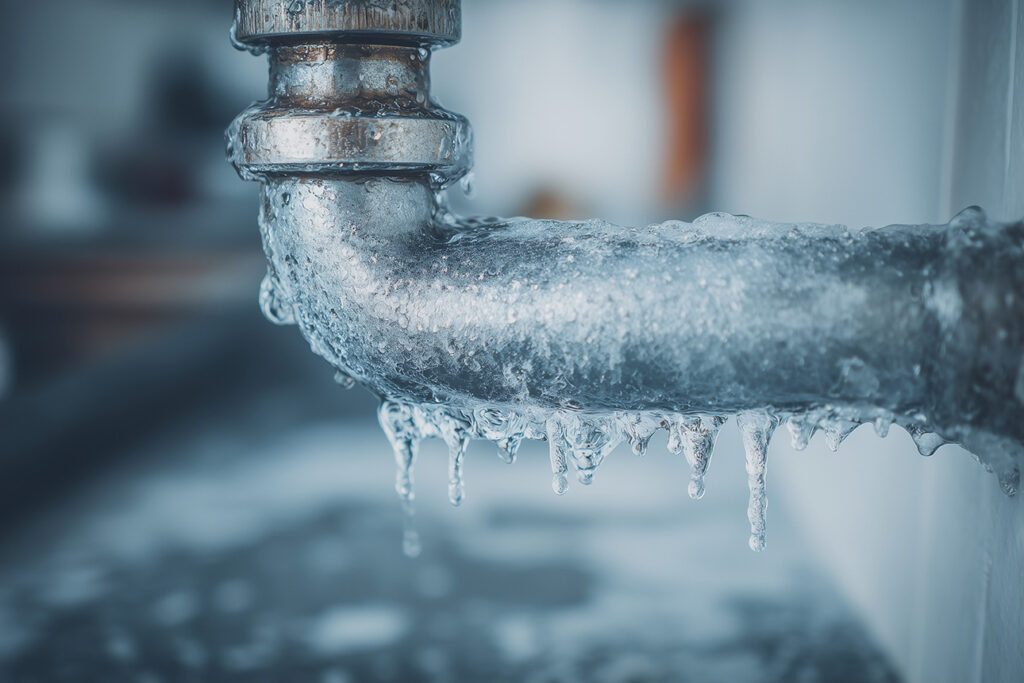
- Frost on Pipes: Visible frost or ice on the outside of a pipe is a clear sign a freeze has occurred.
- Unusual Sounds: Banging, gurgling, or popping noises when you run water can mean ice is blocking flow.
How Do You Detect Frozen Pipes Through Water Pressure and Visual Indicators?
Compare flow at several faucets around the property. If one area has weak flow while others are normal, that run may be frozen. Also inspect exposed pipes for frost or ice buildup — that quick visual check often confirms the problem.
Where Are the Most Vulnerable Areas for Pipe Freezing in Homes and Businesses?
Pipes in unheated zones — basements, attics, crawl spaces, exterior walls, and garages — are most at risk. Runs along outside walls or under windows are also vulnerable. Identifying these routes helps you target insulation and other protections where they’ll do the most good.
What Immediate Steps Should You Take If You Discover Frozen Pipes?
If you find frozen pipes, act quickly but safely to limit damage. Take these immediate steps:
- Shut Off the Main Water Supply: Turn off the main valve to stop water flow and lower the chance of a burst.
- Open Faucets: Open the taps served by the affected pipes so melting ice can drain and pressure can release.
- Check for Leaks: Look for wet spots, cracks, or bulging pipes that could indicate a rupture.
How Do You Safely Shut Off the Main Water Supply and Relieve Pressure?
Find the main shut-off — usually near the water meter or where the line enters the building — and turn it clockwise to close. After shutting off the water, open faucets throughout the building to drain remaining water and relieve pressure so thawed water can exit safely.
What Are the Recommended Safe Thawing Methods and When to Call a Professional?
Warm the frozen section slowly and carefully. A hairdryer, heat lamp, or a portable space heater (used safely) works well — move heat from the faucet toward the frozen spot. Never use an open flame. If heating doesn’t work, you spot any leaks, or you can’t find the freeze, call a professional plumber — attempting repairs on a burst pipe can make things worse.
What Emergency Repair Services Does Pither Plumbing Offer for Frozen and Burst Pipes?
Pither Plumbing provides full emergency repair services for frozen and burst pipes. Our team responds quickly to limit damage and get your water back on safely — 24/7.
How Does Pither Plumbing Provide 24/7 Rapid Response and Advanced Diagnostics?
We’re available around the clock so you don’t have to wait when minutes matter. Using video camera inspection and other diagnostic tools, we locate problems fast and recommend the right, cost-effective repair.
What Are the Benefits of Trenchless Plumbing Repair for Burst Pipes?
Trenchless repair avoids major digging, speeds up repairs, and often lowers restoration costs. When the situation allows, we use trenchless techniques to fix damaged lines with minimal impact to your yard or building.
What Are the Costs and Risks Associated with Frozen Pipe Damage?
Costs depend on how much damage there is and how accessible the pipes are. A small frozen section may be inexpensive to repair, while a burst line that damages walls or flooring increases the total bill. Knowing likely ranges helps you plan for repairs or an insurance claim.
How Much Does Frozen Pipe Repair Typically Cost in Longview, TX?
In Longview, TX, frozen pipe repairs commonly run between $300 and $1,500 depending on severity and access. Labor, parts, and any cleanup affect the final price.
What Insurance Coverage Options Exist for Frozen and Burst Pipe Damage?
Many homeowners policies cover sudden damage from frozen or burst pipes, but coverage varies. Review your policy and talk with your insurance agent to confirm what’s covered, any deductibles, and whether certain preventative steps are required to keep coverage valid.
How Can You Winterize Your Plumbing System for Vacation and Long-Term Protection?
Winterizing before a long trip or before the season hits lowers the risk of freeze-related damage. These steps protect your water lines both while you’re away and long term:
- Insulate Pipes: Cover exposed pipes with appropriate insulation to hold heat.
- Drain Water: Fully drain lines that won’t be used, including water heaters and outdoor spigots.
- Seal Cracks: Close gaps around exterior walls, windows, and doors so cold air can’t reach plumbing runs.
What Are the Key Steps in a Comprehensive Winter Plumbing Checklist?
An effective winter plumbing checklist should include these items:
- Inspect and Insulate: Walk through unheated spaces and add insulation where needed.
- Drain Outdoor Faucets: Remove hoses and drain outdoor fixtures.
- Set Thermostat: Program the thermostat to maintain a safe baseline temperature before you leave.
How Do You Prepare Outdoor Faucets and Commercial Plumbing for Cold Weather?
For outdoor faucets, disconnect hoses, drain the lines, and add insulated faucet covers. For commercial systems, schedule a professional winterization check so boilers, pumps, and exposed piping meet industry best practices and won’t fail in a freeze.
Service | Description | Cost Estimate |
Frozen Pipe Repair | Repairing pipes that have frozen or burst | $300 – $1,500 |
Emergency Plumbing | 24/7 rapid response for urgent plumbing problems | Varies based on service |
Trenchless Repair | Non-invasive pipe repair option to reduce disruption | $1,000 – $3,000 |
This table summarizes common services we provide with typical cost ranges. Use it as a quick reference when planning repairs or comparing options.
In short: take basic precautions, watch for warning signs, and act quickly if a freeze happens. If you face frozen or burst pipes, Pither Plumbing is ready to help with fast, professional emergency service and practical, long-term solutions.
Frequently Asked Questions
What Are the Long-Term Effects of Frozen Pipes on Plumbing Systems?
Frozen pipes can cause lasting damage. When water freezes it expands, which can crack or weaken pipe walls. Those cracks may not fail immediately but can lead to leaks and bigger problems later. If a burst goes unnoticed, it can cause structural damage to walls, floors, and foundations and promote mold growth — all of which increase repair costs.
How Can You Identify Vulnerable Plumbing Areas Before Winter?
Do a walk-through and look for pipes in unheated areas like basements, attics, and crawl spaces, and for runs along exterior walls or under windows. Use a temperature gauge during cold snaps and seal drafts where cold air can reach pipes. Insulate those lines to reduce the risk of freezing.
What Should You Include in a Winterization Kit for Your Plumbing?
A good winterization kit should include foam pipe insulation, heat tape, insulated faucet covers, and a wrench for shutting off water supplies. Add plumbing-safe antifreeze if needed and a thermometer to monitor vulnerable areas. Having these items ready makes quick winter prep easier.
How Often Should You Inspect Your Plumbing for Winter Readiness?
Inspect your plumbing at least once a year, ideally in the fall before cold weather arrives. Check for wear, leaks, or gaps in insulation. Consider a professional inspection every few years to catch issues early and keep systems reliable.
What Are the Risks of Ignoring Signs of Frozen Pipes?
Ignoring signs of frozen pipes can lead to serious consequences: burst pipes, extensive water damage, structural repairs, and mold. Small damage can rapidly grow into larger, costlier problems. Regular checks and prompt action can save you time and money.
Can You Use Space Heaters to Prevent Frozen Pipes?
Yes — space heaters can help if used safely. Place them near exposed pipes in vulnerable areas, but never leave them unattended and follow all safety guidelines to avoid fire risk. Combined with insulation and proper thermostat settings, heaters can be an effective part of your freeze-prevention plan.